What if you only
needed one Key?
Your home. Your car.
Your money. Your computer.
Just hold up your Key.
Meet Presence

In development · Planned 2027
One Key.
One familiar action.
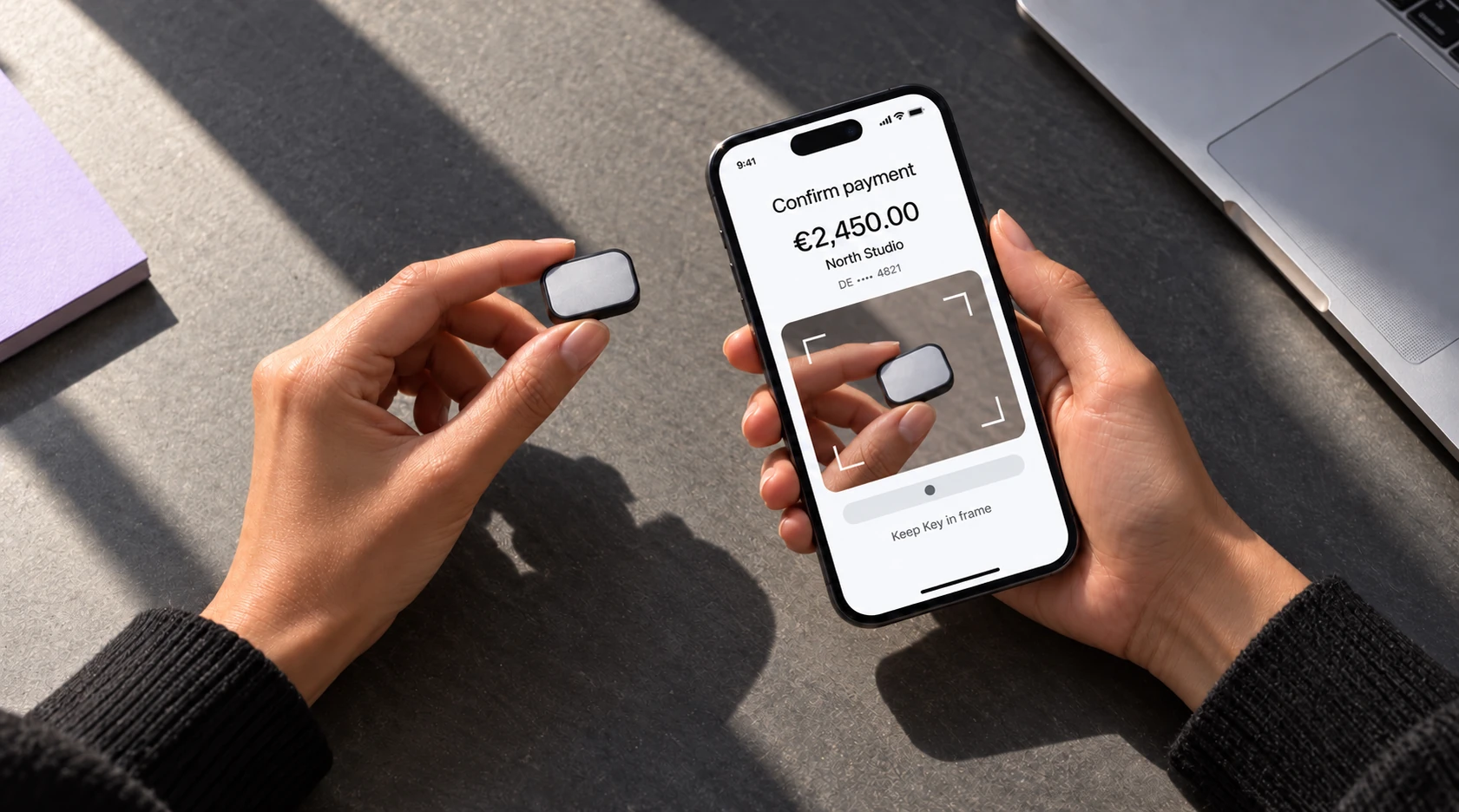
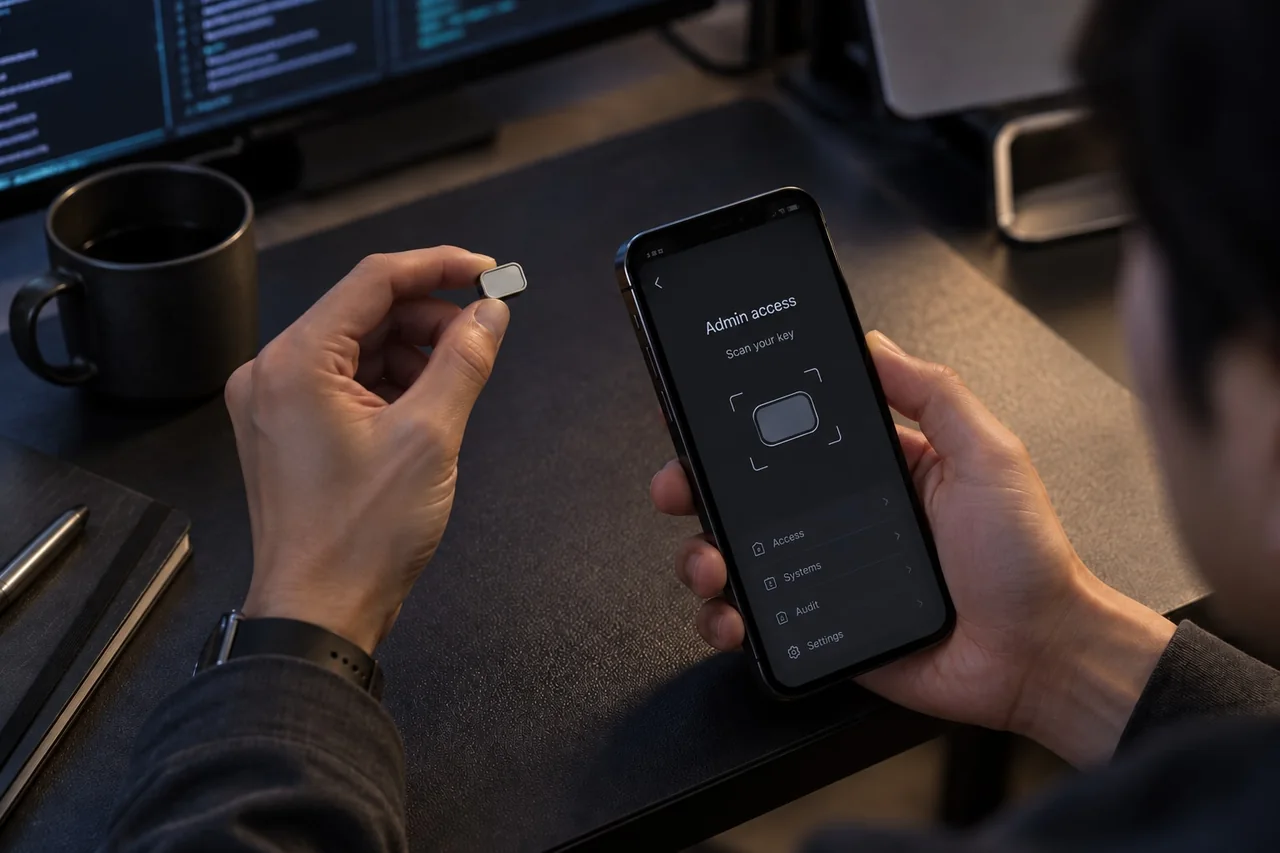
Open your door. Unlock your car. Sign in. Pay.
Carry your Key with you. Hold it up when it’s needed.
How the Key works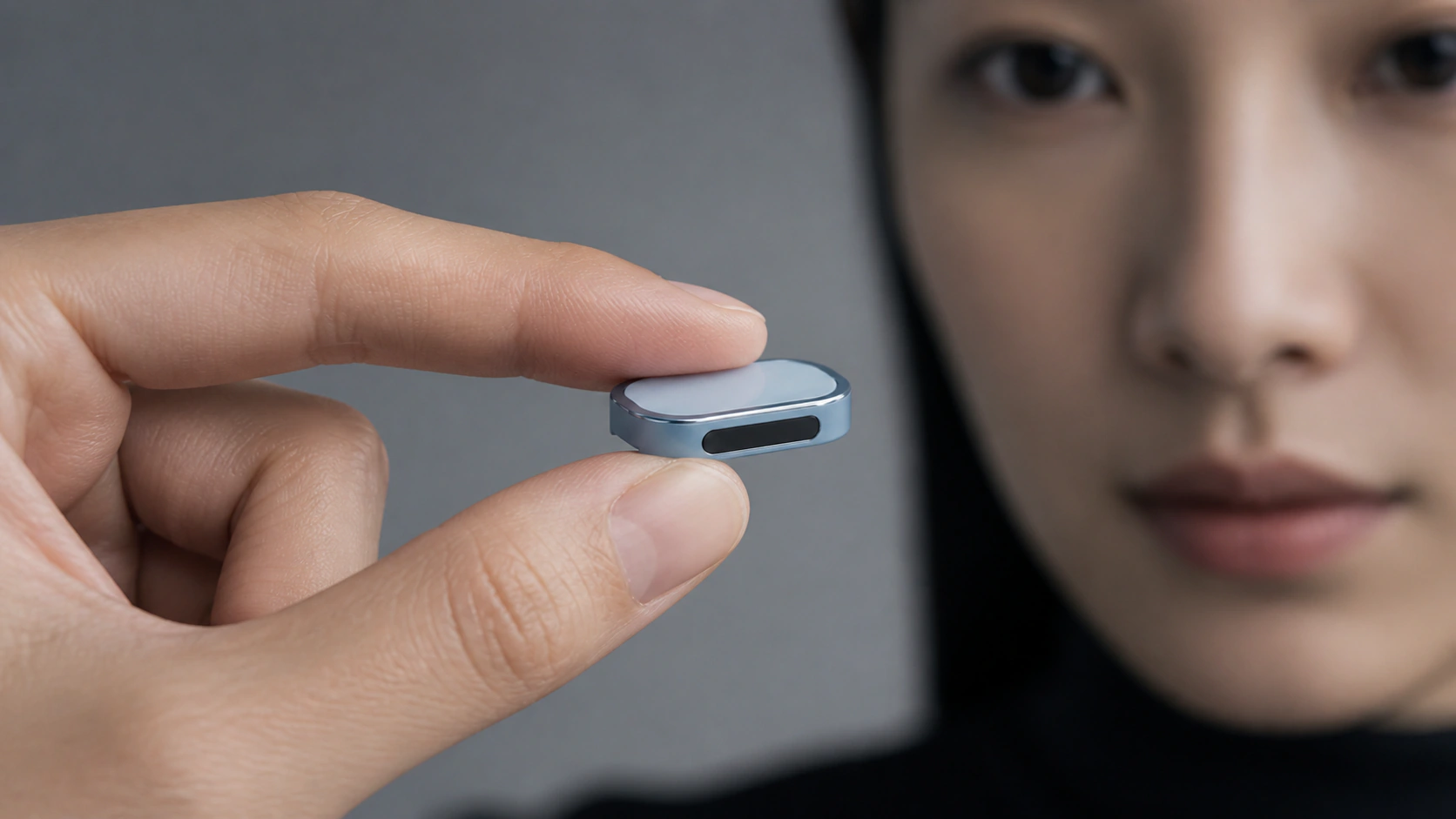
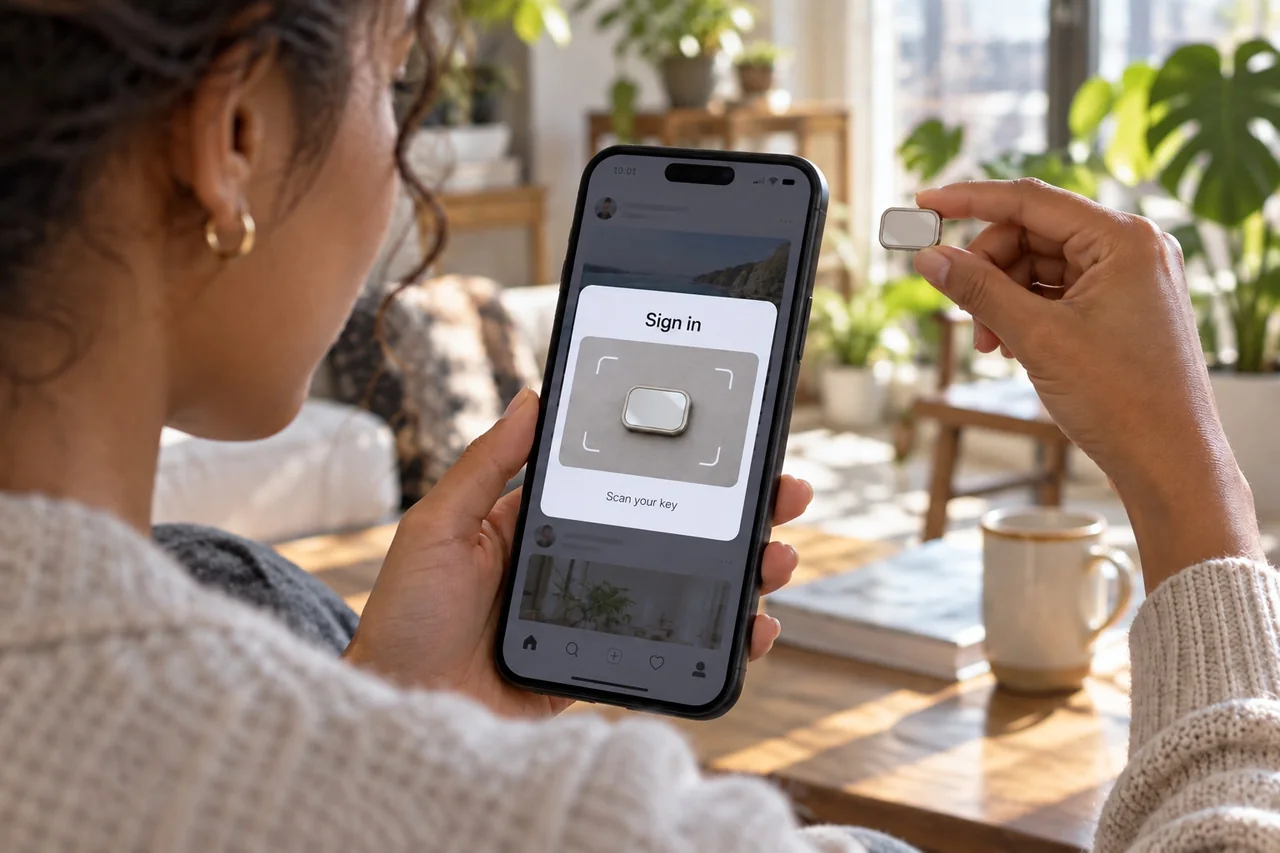
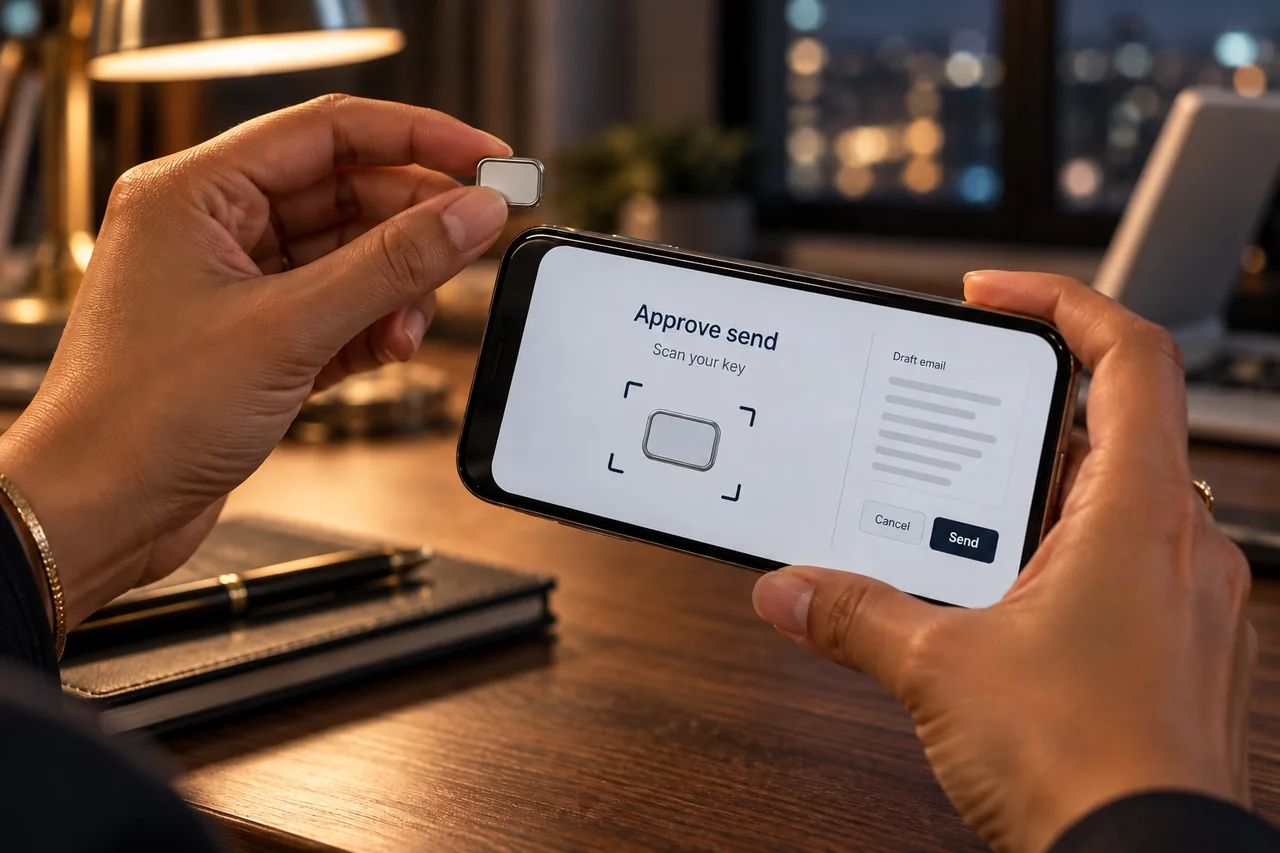
For the things
you do every day.
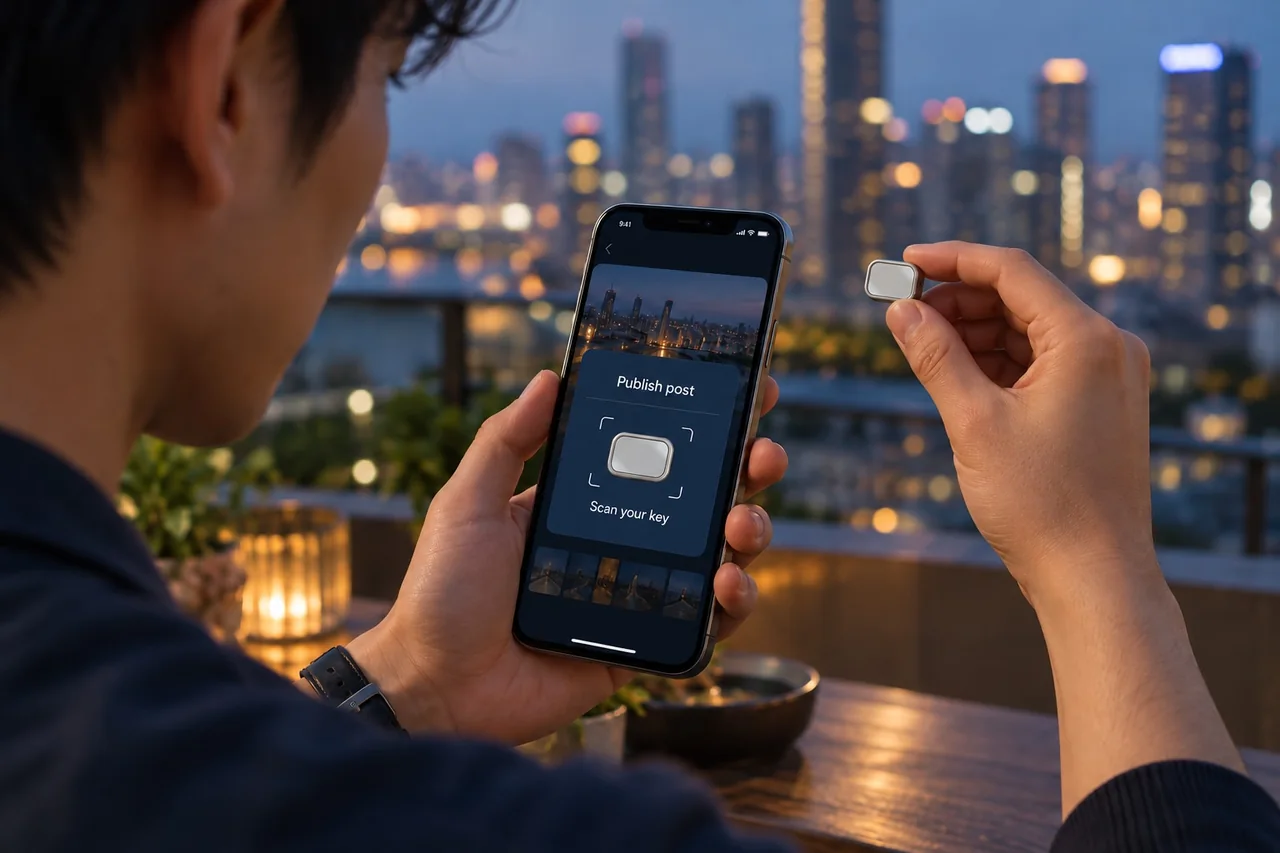
Sign in to an account.
Explore this applicationOpen a door.
Explore this applicationPay with your Key.
Explore this applicationWhere will I be able to use it?
Presence Key is in development. Each use depends on a service supporting it. Payments are planned and require a connected payment provider; this connection is not available yet.

The Key you carry.
The platform behind it.
Your Key is the personal device. A compatible checkpoint performs the physical check. Presence connects the result to the request; the service decides what happens next.
- 01
The request.
A service asks for a check before a specific action.
- 02
Your confirmation.
You follow the check for that request with your Key.
- 03
The decision.
The service uses the result alongside its permissions and safeguards.
Beyond the Key: objects and environments
Presence Key focuses on people. Presence Layer is designed to establish physical authenticity for objects. Presence Home is a longer-term direction for bringing verified people, objects and actions together.
Your Keys, requests
and connected devices.
Manage your Keys, review requests and see your connected devices in Presence.


Why being there matters.
Images, voices and messages can be generated. As digital representations become more convincing, the source behind them matters. This is the question behind 4SI: how can a digital service obtain evidence of physical presence?
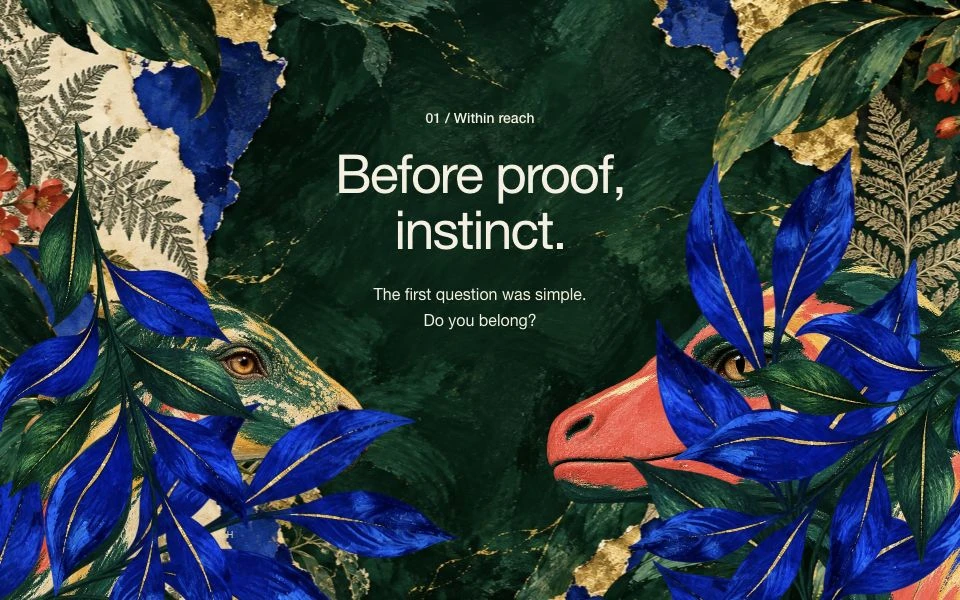
The art of believing.
Read the story & sources
Within reach
Before proof, instinct. The first question was simple. Do you belong?
Recognition brought us closer. A familiar movement. A familiar sound. Trust began within reach.
A familiar face
We learned to know a face. Memory. Gesture. Reputation. Trust lived between people.
Then trust had to travel. How could someone speak for you when you were not there?
A mark travels
So trust left a mark. A sign could carry authority beyond the person who made it.
A small impression. A far-reaching promise. The mark mattered because of who stood behind it.
A person on paper
A person. On paper. A name. A likeness. Permission to pass. A record could open a door.
The record became the shortcut. We learned to look at the signs and infer the person.
The convincing copy
The copy became convincing. AI can generate the face, the voice and the message.
A likeness. Not a guarantee. The surface can be convincing. The source can be someone else.
The moment of consequence
A familiar face. A familiar voice. The danger is what we do next.
An imitation can become an instruction. A door opened. A payment approved. A decision made on the wrong evidence.
A question of scale
When likenesses multiply. How do we know who is behind them? Recognition alone cannot carry the burden.
And beyond human intelligence? Even in a possible ASI future, capability and authenticity remain different questions.
Between realities
Humanity is creating digital entities. Familiar faces and voices can be synthesized. Recognition alone is no longer enough.
An interface between realities. To connect digital claims with physical evidence. And verify what recognition alone cannot.
A symbolic history
The animals, portraits, signet and document are artistic metaphors. This is not a literal reconstruction of dinosaur behaviour, a chronology shared by all cultures, or a reproduction of official identity documents.
Why the risk is current
The FBI describes how generated images, cloned voices and synthetic video can make impersonation and fraud more convincing and scalable. Synthetic media also has legitimate uses; a generated image is not inherently fraudulent.
FBI / IC3 — Generative AI and financial fraud (opens in a new tab)
NIST examines provenance, authentication, labelling and detection as different approaches to digital-content transparency, including their limitations.
NIST AI 100-4 — Synthetic content transparency (opens in a new tab)
A possible horizon
The ASI scene is speculative. Definitions and timelines remain contested. The story makes no claim that superintelligence is inevitable or already established.
Google DeepMind — Levels of AGI (opens in a new tab)
Our point of view
Humanity is beginning to share its digital spaces with entities it has created. Familiarity alone cannot establish the source of a representation. We argue for an interface that connects synthetic claims and actions with verifiable physical evidence. The paired sculptural portraits are an artistic metaphor for this boundary.
The artwork combines generated photographic, painted and sculptural imagery.
One Key.
Your choice.
Explore the form, intended finishes and ways to carry your Key.


Make it yours.
Choose from eight intended finishes and register your interest. A release reservation is free and non-binding; it is not a purchase or a guaranteed delivery.
Explore finishes